 Four-Faith IoT
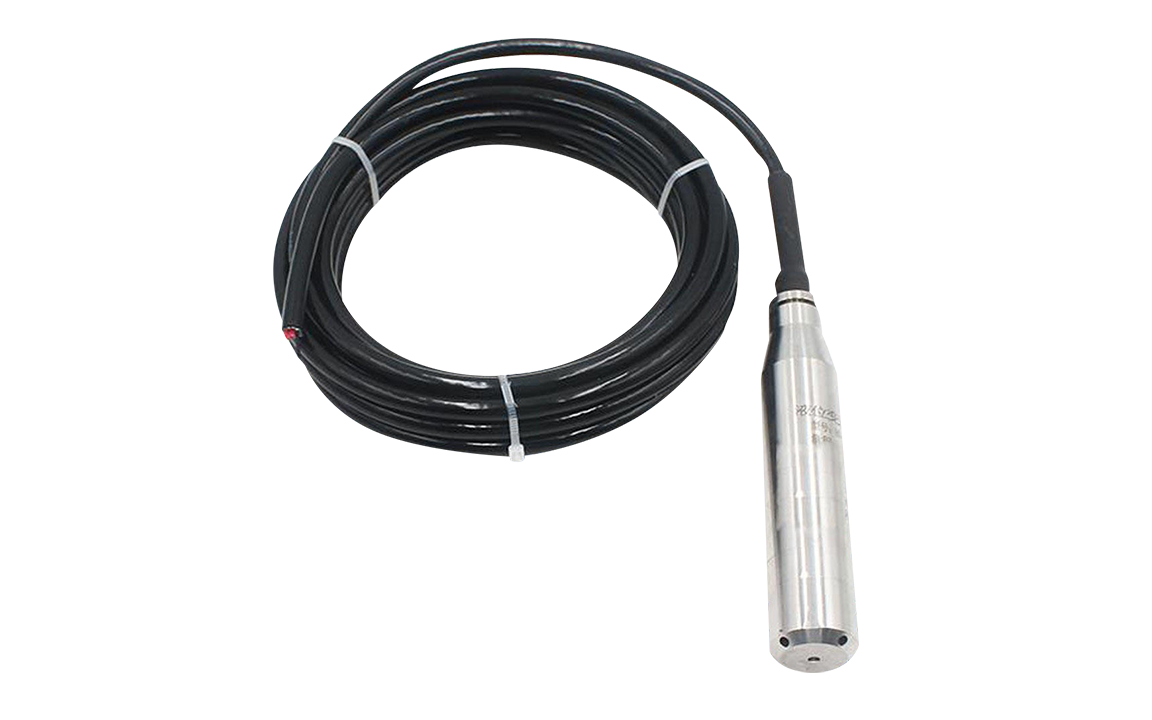
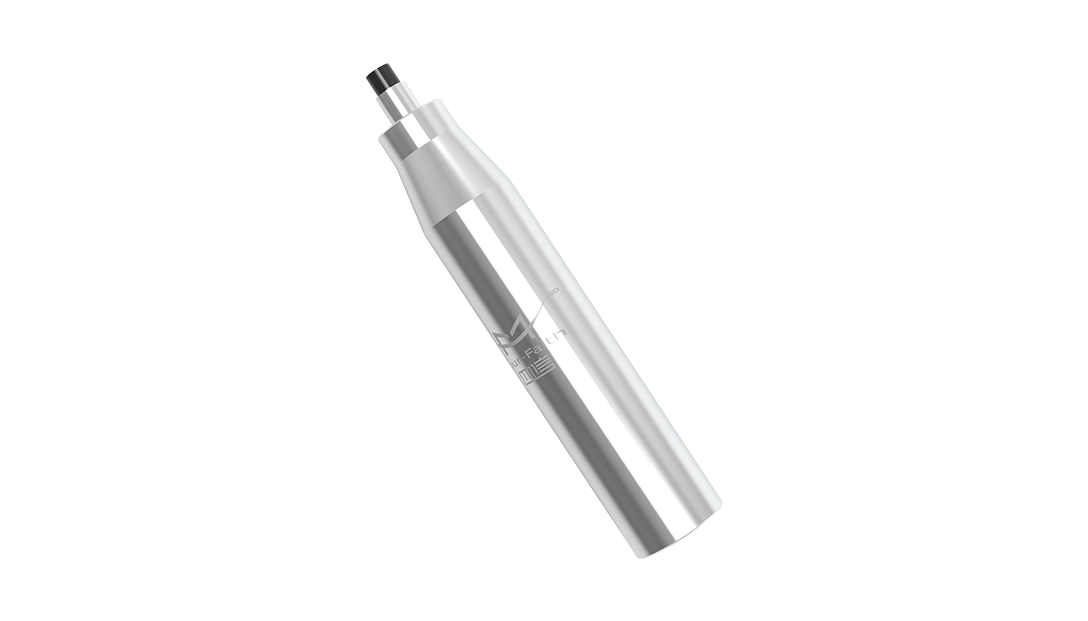
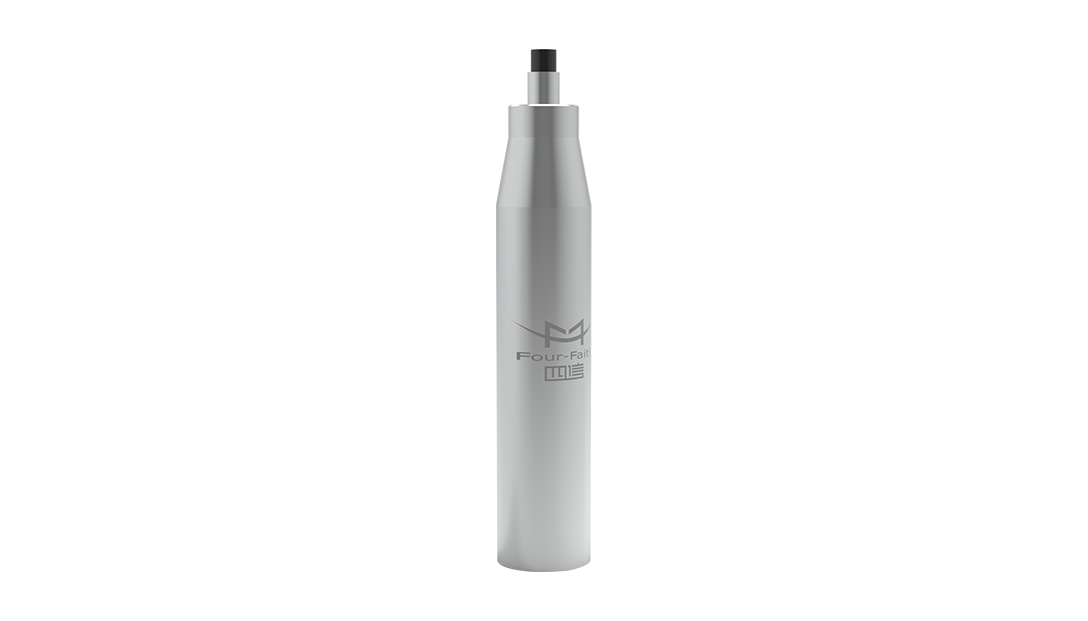
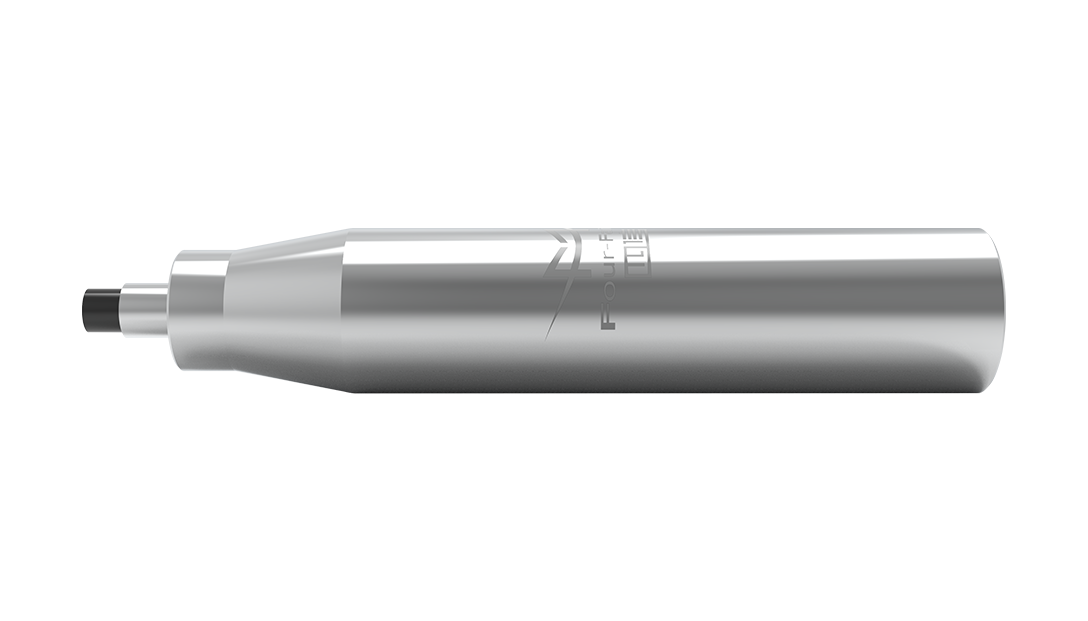
Real-time acquisition of water level and water temperature; automatic atmospheric pressure compensation via the built-in vented cable; built-in temperature correction; RS485 Modbus digital output; automatic conversion of water level to physical values; ability to read reference values and real-time measurements; support for on-site recalibration of the reference zero point; dual anti-interference and lightning protection via the grounded housing and shielded cable.
No built-in optional modules; can be purchased with a protective filter tube, fixing steel wire rope and a compatible data logger.
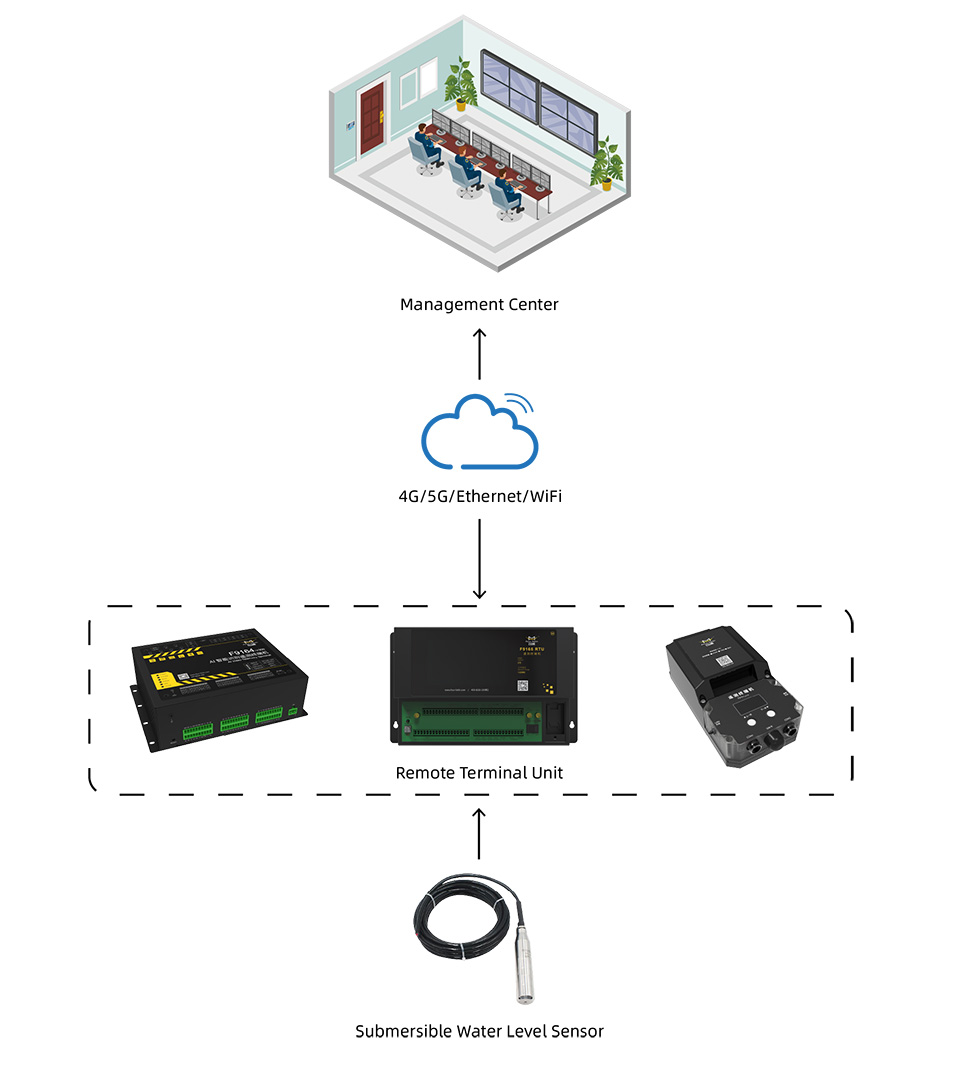
The submersible water level sensor utilises a silicon pressure sensor principle, featuring a compact, all-stainless-steel probe with an integrated vented shielded cable. It automatically performs temperature and atmospheric pressure compensation, and outputs standard digital water level data via RS485. Suitable for use with pressure tubes,long-term submerged monitoring in rivers, lakes and reservoirs. Its compact size allows it to fit into 1-inch-diameter pressure measurement tubes, significantly simplifying drilling and installation work. It eliminates the need for frequent on-site calibration, ensuring long-term stability and reducing the costs of manual inspections.
Slim Probe Design: 24 mm outer diameter fits standard 1-inch pressure pipes, reducing drilling costs.Barometric Compensation: Ventilation cable provides full-range automatic compensation to eliminate atmospheric pressure errors.Dual Measurement: Simultaneous high-accuracy water level and temperature acquisition. Robust Construction: Silicon pressure sensor withstands 1.2× full-scale pressure, ensuring leak-free long-term submersion.Anti-Interference: Shielded twisted-pair vented cable with full-unit earthing protects against EMI and lightning.Wide Range Options: Multiple specifications available, from shallow pressure tubes to deep reservoirs.Easy Deployment: Standardized protocols for burial, borehole sealing, and calibration simplify on-site installation.High Stability: Pre-soaked water-permeable components ensure long-term stability with no significant lag or drift.
| Measurement parameters | Water level, water temperature | Measurement range | 0–3.5 m, 0–10 m, 0–20 m, 0–35 m, 0–70 m |
|---|---|---|---|
| Accuracy | ≤0.1% FS (Level), ±0.5°C (Temperature) | Resolution | ≤0.02% FS |
| Interface | RS485 (Modbus), shielded twisted-pair with internal air conduit Power Supply: Not specified | Protection | Stainless steel sealed probe; hydrostatic pressure resistance 1.2× full scale |
| Operating Temperature | -40°C to +80°C | Storage Temperature | -30°C to +70°C |
| Dimensions | Φ24 × 136 mm | Insulation Resistance | ≥50 MΩtd> |
Geotechnical slope pressure tubes; seepage pressure monitoring in hydraulic structures; long-term underwater water level monitoring in reservoirs, rivers and lakes
A: Disassemble and soak the components for at least 2 hours, then assemble them underwater. Trapped air will cause severe measurement lag and data distortion.
A: After soaking the probe in constant-temperature water for 2 hours, remove it and record the reference value. The error between two calibrations must be ≤0.5% FS. If deviations occur, repeat the soaking process and recalibrate the zero point.
The borehole diameter must be ≥100 mm, and the pressure tube must be wrapped in geotextile. Backfill the permeable section with highly permeable filter material, and seal the impermeable section by compacting bentonite in layers. Finally, fill the system with water to test permeability sensitivity.
Send your project parameters, our engineers reply within 24 hours.
Get Free Quote